


What Type of Plasterboard Do I Need? A Complete Guide
Published on May 14, 2026
Posted in Advice & Reviews
by MKM
6 minutes min read
Plasterboard is a core material on almost every build, from simple partitions to full refurbs. But not all plasterboard performs the same and when you’re working on site, choosing the wrong board can lead to failed inspections, callbacks, or poor long-term performance.
That’s where Siniat plasterboard systems come in. Designed to meet UK building regulations and real-world site conditions, Siniat boards cover everything from moisture resistance and fire protection to acoustic control and thermal efficiency.
Whether you’re fitting out a bathroom, upgrading insulation or building a partition wall, this guide breaks down exactly what type of plasterboard you need and which Siniat board to use.
What is Plasterboard?
Plasterboard is made from a gypsum core bonded between paper liners and is used to form internal walls, ceilings and partitions. It’s typically fixed to timber or metal studwork and finished with plaster or jointing systems.
Siniat plasterboards follow this same principle but are engineered with performance-enhancing additives and laminates to meet specific requirements like fire resistance, sound insulation and moisture control.
Speak to your local MKM branch we can help you spec the best Siniat board for your project, and get better results.
Types of Siniat Plasterboard
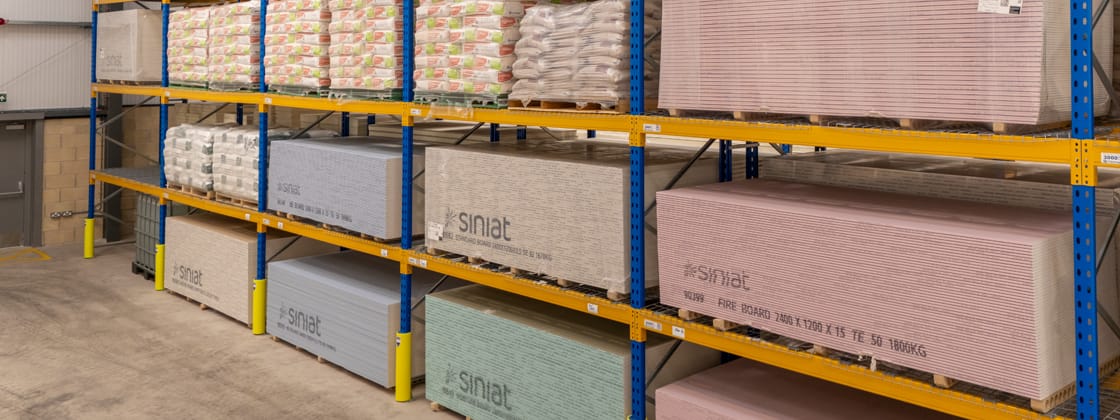
Siniat manufactures a full range of plasterboard solutions designed for different environments and building regulations.
The main categories include:
- Standard plasterboard
- Moisture resistant plasterboard
- Fire rated plasterboard
- Acoustic plasterboard
- Thermal (insulated) plasterboard
- Vapour control plasterboard
- High-performance and impact boards
Each is designed to handle specific site conditions while helping meet Building Regulations like Part B (fire), Part E (acoustics) and Part L (thermal performance).
Siniat GTEC Wallboard - Standard Plasterboard
This is your go-to board for general drylining work.
Typical uses:
- Internal walls
- Ceilings
- Stud partitions
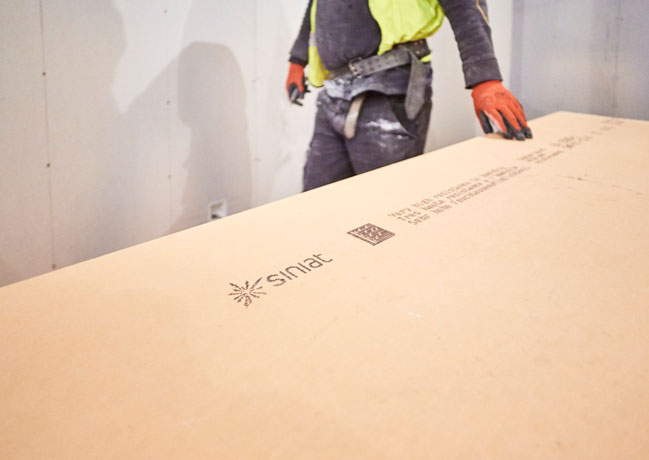
Siniat GTEC Standard Wallboard is a versatile gypsum board suitable for both skimming and taping & jointing. It’s available in multiple sizes and thicknesses, making it adaptable across most projects.
Best for:
Dry environments where no specialist performance is required.
Siniat Moisture Board - Moisture Resistant Plasterboard
For rooms exposed to humidity, standard plasterboard won’t last. That’s where moisture resistant boards are essential.
Typical uses:
- Bathrooms
- Kitchens
- Utility rooms
Siniat GTEC Moisture Board contains water-resistant additives in both the core and liner, helping protect against damp, mould and deterioration.
Best for:
Although you can use standard plasterboard in bathrooms, it’s not recommended. Moisture resistant boards are designed for longevity and compliance in wet areas.
Siniat Fire Board – Fire-Rated Plasterboard
Fire safety is critical on many projects, particularly in garages, multi-occupancy buildings and escape routes.
Typical uses:
- Garage-to-house walls
- Stairwells and corridors
- Compartment walls
Siniat Fire Board is engineered with enhanced fire resistance and can achieve up to 60 minutes fire protection with a single 15mm layer in the right system.
This helps meet Part B regulations and improves safety on site.
Siniat dB Board / GTEC E Board - Acoustic Plasterboard
Noise transfer is a major issue in modern builds, especially in flats and shared spaces.
Typical uses:
- Party walls
- Apartments
- Bedrooms and offices
Siniat dB Board and GTEC E Board are dense plasterboards designed to reduce sound transmission. They can significantly improve acoustic performance when used in the correct system.
Best for:
Projects where sound insulation is a requirement under Part E.
Siniat Thermal Boards - Thermal Plasterboard
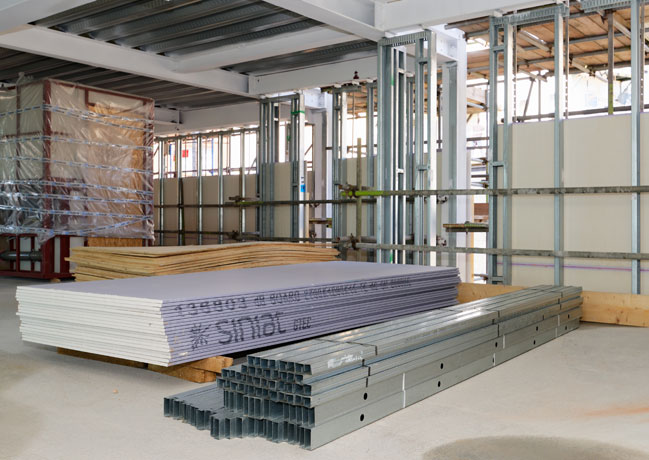
Thermal boards combine plasterboard with insulation backing, improving energy efficiency without increasing wall thickness significantly.
Typical uses:
- External wall linings
- Solid wall upgrades
- Refurbishments
Siniat offers several options, including:
- Thermal EPS boards (expanded polystyrene)
- Thermal XP boards (extruded polystyrene)
- Thermal PIR boards (high-performance insulation)
These systems can dramatically improve thermal performance and help meet Part L requirements. Speak to your local MKM branch to find the right Thermal Board for your job.
Siniat Vapour Board - Vapour Control Plasterboard
Condensation can cause serious long-term issues in insulated walls and roofs and vapour board can help reduce this.
Typical uses:
- Loft conversions
- External wall linings
- Insulated partitions
Siniat GTEC Vapour Board features a metallised backing layer that reduces vapour transfer, helping prevent condensation build-up inside the buildings structure.
How to Choose the Right Plasterboard
Here’s a quick trade-friendly guide using Siniat products:
- Bathroom walls → GTEC Moisture Board
- Garage walls → Siniat Fire Board or Fire MR Board
- Separating walls → dB Board or GTEC E Board
- External walls → Thermal PIR or EPS Board
- Lofts / insulated systems → Vapour Board
- General walls & ceilings → GTEC Standard Wallboard
The key is matching the board to the environment and performance requirement, not just using what’s on the van. If you’re still unsure about the right board, your local MKM branch can help.
Plasterboard Thickness Guide
Siniat boards come in standard thicknesses, with each suited to different applications:
- 9.5mm – ceilings and lightweight work
- 12.5mm – standard walls and partitions
- 15mm+ – fire rated systems and higher performance builds
Thicker boards generally offer improved fire resistance, strength and sound insulation.
Installation Tips
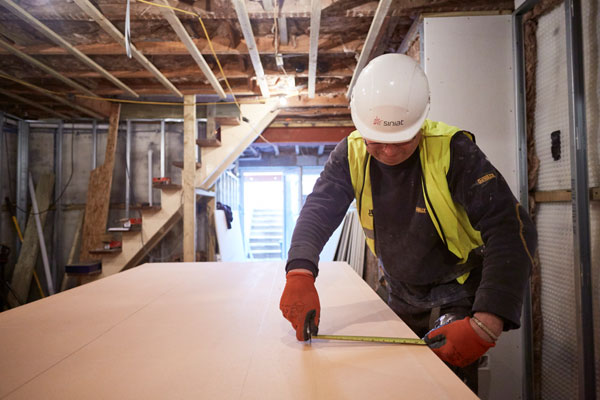
Getting the right board is only half the job, installation matters just as much. Key tips from Siniat installation guidance include:
- Always fix boards securely to timber or metal framing at correct centres
- Stagger joints to improve strength and performance
- Use the correct screws and fixings for the system
- Seal and prime boards where required (especially moisture/vapour boards)
- Follow full system specifications for fire and acoustic performance
Siniat systems are designed to work together, so using compatible components helps ensure compliance and long-term reliability.
At MKM, we stock a full range of Siniat plasterboard, including standard, moisture resistant, fire rated, acoustic and insulated options.
Whether you’re working on a small job or a full build, our local branch teams can help you choose the right board and system for the job.
Visit your local MKM branch or shop online to get the materials you need.
Frequently Asked Questions
What plasterboard should I use for ceilings?
Siniat GTEC Standard Wallboard (9.5mm or 12.5mm) is commonly used. For added performance, consider fire or acoustic boards.
What plasterboard should I use in bathrooms?
Siniat GTEC Moisture Board is the best choice for humid environments.
What plasterboard is best for soundproofing?
Siniat dB Board or GTEC E Board provides strong acoustic performance.
Do I need fire rated plasterboard in a garage?
Yes. Siniat Fire Board is typically required to meet fire regulations between garages and living spaces.