


Timber That Takes a Hit: Where to Source Impact-Resistant Wood
Published on February 27, 2026
Posted in Advice & Reviews
by MKM
7 min read
Not all timber is created equal when it comes to handling knocks, bumps, and everyday wear. The right timber species can mean the difference between a surface that dents and damages easily and one that stands up to years of punishment. Whether you're fitting out a busy workshop, installing commercial flooring, or building playground equipment, knowing which timber to choose makes all the difference.
Let’s explore how to identify genuinely impact-resistant timber and where to source wood that won't let you down.
Key Factors That Make Timber Impact-Resistant
Understanding what gives timber its ability to absorb impacts helps you choose the right species and supplier for your specific application. Impact resistance isn't just about hardness; it's a combination of several physical properties working together.
Janka Hardness Rating
The Janka hardness test measures the force required to embed a steel ball halfway into a piece of wood. Species with higher Janka ratings resist denting and surface damage more effectively. For context, European Oak sits around 5.5 kN, while Jarrah can exceed 8.5 kN. Hardwoods typically outperform softwoods in impact resistance, though some softwoods like Douglas Fir offer surprising resilience for their weight class.
Density and Grain Structure
Dense timber with tight, interlocking grain patterns distributes impact forces more effectively than loose-grained species. Beech, Ash, and Iroko all feature dense cellular structures that help absorb shocks without splitting or splintering. The grain direction also matters, as end-grain naturally resists impacts better than face grain, which is why butcher blocks use end-grain construction.
Flexibility vs. Rigidity
Surprisingly, some impact resistance comes from flexibility. Timber that's too rigid can crack or shatter under sudden force, while species with slight flex can absorb energy and return to shape. Ash is prized for tool handles precisely because it combines hardness with enough give to handle repeated impacts without fracturing.
Moisture Content Stability
Timber that moves excessively with moisture changes becomes more brittle and prone to surface checking. Impact-resistant applications require timber that's been kiln-dried to appropriate moisture content (typically 10-12% for interior use, 16-18% for exterior) and maintains dimensional stability over time.
Comparing Timber Species for Impact Resistance
Different species offer varying levels of impact resistance depending on their natural properties. This comparison helps you match timber to your specific application requirements.
|
Timber Species |
Janka Hardness (kN) |
Best Applications |
Key Characteristics |
|
5.5 |
Workshop benches, flooring, furniture |
Excellent all-rounder, good availability, balances hardness with workability |
|
|
Ash |
5.9 |
Tool handles, sports equipment, high-impact joinery |
Shock-absorbent with flex, resists splitting, traditional choice for striking tools |
|
7.0 |
Commercial flooring, workbenches, children's furniture |
Very hard, smooth finish, widely available, affordable for its hardness |
|
|
Iroko |
6.3 |
Outdoor furniture, worktops, school/playground fittings |
Natural oils resist moisture, less movement than oak, good exterior durability |
|
Jarrah |
8.5 |
Heavy-duty flooring, marine fittings, industrial applications |
Extremely hard, resists termites, excellent for extreme-use environments |
Note: Hardness ratings vary slightly depending on testing methods and timber origin. These figures represent typical ranges for comparison purposes.
Where to Source Impact-Resistant Timber in the UK
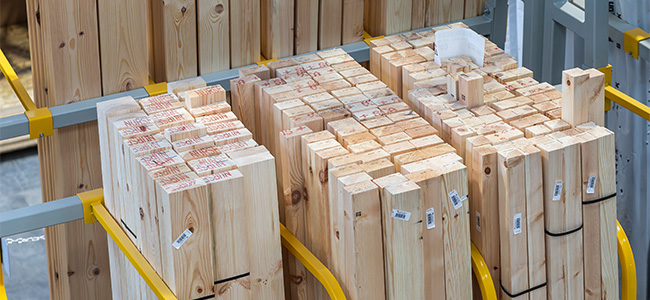
Finding suppliers who consistently stock high-quality, impact-resistant timber makes all the difference to your project's success. Not all merchants carry the harder species or maintain the inventory depth needed for larger commercial or trade applications.
Independent Building Merchants with Specialist Timber Yards
Merchants like MKM operate dedicated timber yards across the UK, stocking both common hardwoods and specialist species. The advantage here is access to trade expertise, with staff who understand application-specific requirements and can recommend appropriate grades. MKM branches typically carry European Oak and Beech in various sections, with the ability to source harder species like Jarrah or Iroko through their extensive supply network. You get the benefit of inspecting timber in person, receiving technical advice, and securing consistent grades across larger orders.
Budget Tiers for Impact-Resistant Timber Projects
Your budget significantly influences which species you can specify and where you source them from. Understanding cost tiers helps you balance performance requirements against project economics.
|
Budget Level |
Species Options |
Best For |
Why It Works |
|
Entry-Level |
Douglas Fir, European Redwood (dense grades) |
Light-duty workshops, domestic furniture, indoor fittings |
Affordable softwoods that offer reasonable impact resistance for lower-traffic applications. Select grades minimise knots and provide better structural integrity. |
|
Mid-Range |
European Oak, Ash, Beech |
Commercial flooring, workbenches, playground equipment, general hardwood joinery |
These native and European hardwoods balance excellent impact resistance with good availability and workability. Industry-standard choices for most professional applications. |
|
Premium |
Iroko, Sapele, American White Oak |
High-traffic commercial spaces, exterior applications, architectural joinery |
Superior hardness ratings combined with natural durability. Iroko's natural oils provide moisture resistance alongside impact performance. |
|
Ultra-Premium |
Jarrah, Teak, Cumaru, Ipe |
Extreme-use environments, marine applications, heritage restoration, prestige commercial projects |
Exceptional hardness and density make these tropical hardwoods ideal for the most demanding applications. Longevity often justifies the higher initial investment. |
Practical Tips for Sourcing Impact-Resistant Timber
Getting the right timber at the right price requires more than just picking a hard species. These practical considerations help you source effectively and avoid common pitfalls.
Ask About Grading and Defects
Impact-resistant applications can't tolerate knots near stress points or shakes that might propagate under load. Request Select grade or Prime grade timber where knots are minimal and grain runs true. For structural or heavy-duty use, avoid construction-grade which may include more defects.
Check Moisture Content On Delivery
Even kiln-dried timber can pick up moisture during storage or transport. Use a pin-type moisture meter to verify the timber is within the specified range before acceptance. Timber that's too wet will move excessively after installation, compromising impact resistance and creating gaps or warping.
Source Slightly Oversized Sections
Hard timbers can be difficult to plane or sand without proper equipment. Ordering sections 2-3mm oversized gives you the option to clean up surfaces without losing finished dimensions. This is particularly important for Iroko or Jarrah, as it can blunt standard tooling quickly.
Consider Alternatives to Tropical Hardwoods
European Oak, Ash, and Beech offer excellent impact resistance without the environmental concerns or supply uncertainties associated with tropical species. For many applications, properly selected and installed European hardwoods perform just as well at a lower cost with better availability.
Build Relationships with Your Local Supplier
Merchants who know your business can alert you to incoming stock, hold materials for collection, or source specific grades on request. At MKM branches, regular trade customers benefit from this kind of personalised service, which makes a real difference when you need specific impact-resistant species for tight deadlines.
Don't Assume Online Specifications Are Accurate
Hardwood grading varies internationally, and what's described as "Select grade" by one supplier might not match another's standards. When possible, inspect timber in person before committing to large orders, or request sample pieces for evaluation.
Avoiding Common Problems When Specifying Impact-Resistant Timber
Even experienced specifiers can encounter issues when sourcing harder timber species. Being aware of these common problems helps you avoid costly mistakes.
Confusing Hardness with Impact Resistance
A high Janka rating doesn't automatically mean excellent impact resistance. Extremely hard timber can be brittle and prone to surface checking under sudden loads. Lignum vitae, for example, is one of the hardest woods available, but it can shatter if struck incorrectly. Look for species that combine hardness with some natural resilience.
Overlooking Acclimation Time
Hard timbers need proper acclimation to site conditions before installation. Oak, Beech, and Iroko should sit in the installation environment for 7-14 days before fixing to allow moisture content to equalise. Rushing this step leads to movement, gaps, and reduced impact performance.
Using Inappropriate Fixings
Dense, impact-resistant timber requires pre-drilling for screws and nails to prevent splitting. Standard fixings may not provide adequate holding power in very hard species; consider structural screws rated for hardwoods or traditional dowel joints for furniture applications.
Failing to Account for Tooling Costs
Machining hard timbers dulls standard HSS tooling rapidly. Budget for carbide-tipped or TCT (tungsten carbide tipped) saw blades, router bits, and planer knives if you're working with species harder than Oak. Factor these costs into project budgeting, especially for Jarrah, Iroko, or other premium hardwoods.
Final Recommendations: Matching Timber to Application
The right timber choice depends on your specific project requirements, traffic levels, and performance expectations. Here's how to match your selection strategy to your application.
For Commercial Flooring or High-Traffic Interior Projects: European Oak or Beech provides excellent impact resistance with proven long-term performance. Their consistent availability in volume and ability to match grades across large orders make them ideal for commercial installations where visual consistency matters as much as durability.
For Bespoke Joinery or Furniture Making: Consider specialist hardwoods like Ash (for its shock-absorption properties) or Iroko (for its stability and natural oils). These species offer the hardness ratings needed for furniture that will see daily use, with enough workability to allow detailed joinery and finishing.
For Budget-Conscious Domestic Projects: Douglas Fir or European Redwood in Select grades offer reasonable impact resistance for light-duty applications. While not as hard as Oak or Beech, these softwoods perform well in lower-traffic environments at more accessible price points.
For Exterior or Marine Applications, specify naturally durable hardwoods like Iroko or Jarrah. These species resist not just impacts but also moisture movement, UV degradation, and biological attack, which are essential for long-term exterior performance where replacement costs far exceed initial material investment.
For Workshop Benches and Tool Storage: Beech remains the traditional choice for good reason: its density provides excellent impact resistance for tools and equipment, while its fine grain allows for smooth working surfaces. Ash works equally well where some flex is beneficial, such as areas subject to repeated hammer strikes.
Ready to Source Impact-Resistant Timber?
Whether you're fitting out a commercial space, building workshop furniture, or creating playground equipment that needs to last, choosing the right timber and supplier makes all the difference. At MKM, we can stock a comprehensive range of impact-resistant timber species, including European Oak and Beech, with access to specialist hardwoods through our extensive supply network.
Visit your local MKM branch to discuss your specific requirements with our timber specialists, or explore our full timber range online. We’re here to help you select the right species, grade, and section sizes for your project, backed by technical advice that comes from decades of experience in the building trade.
Just ask. We're built around you.